
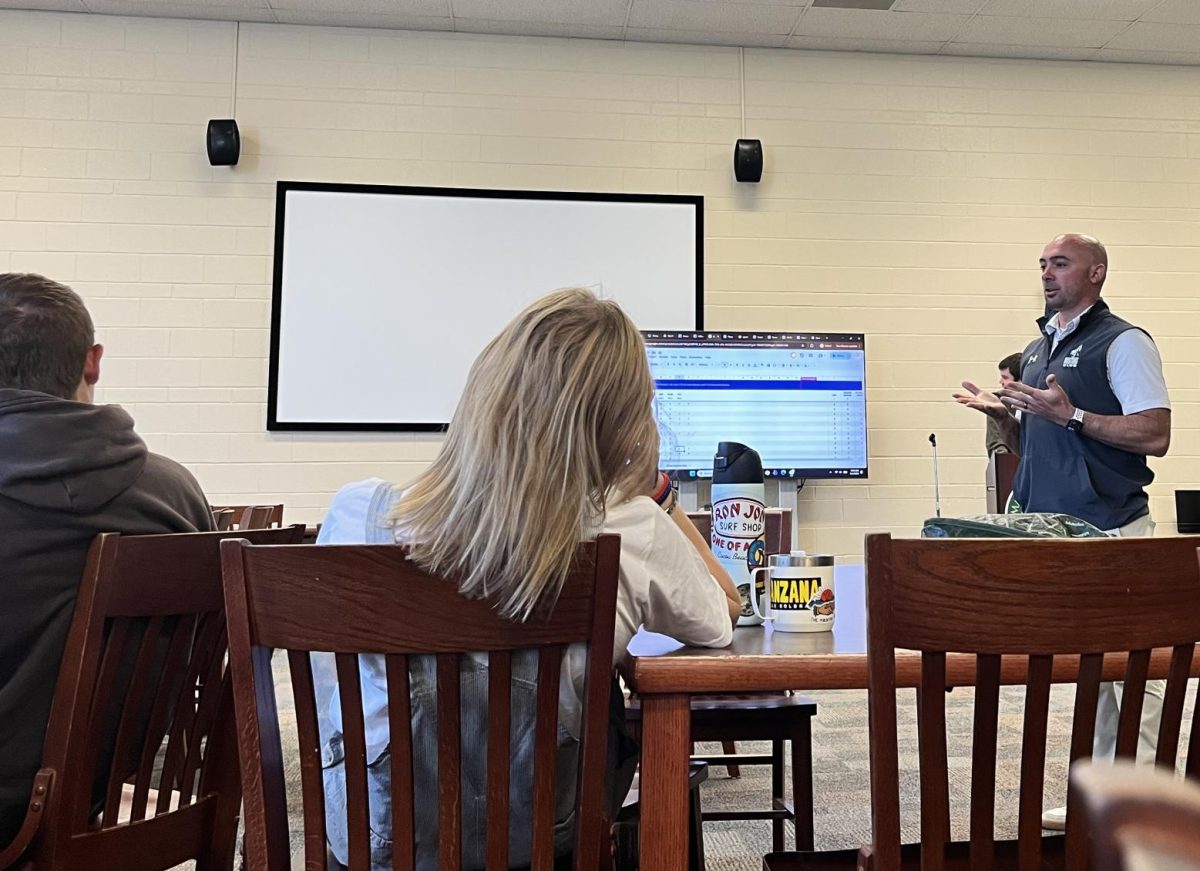




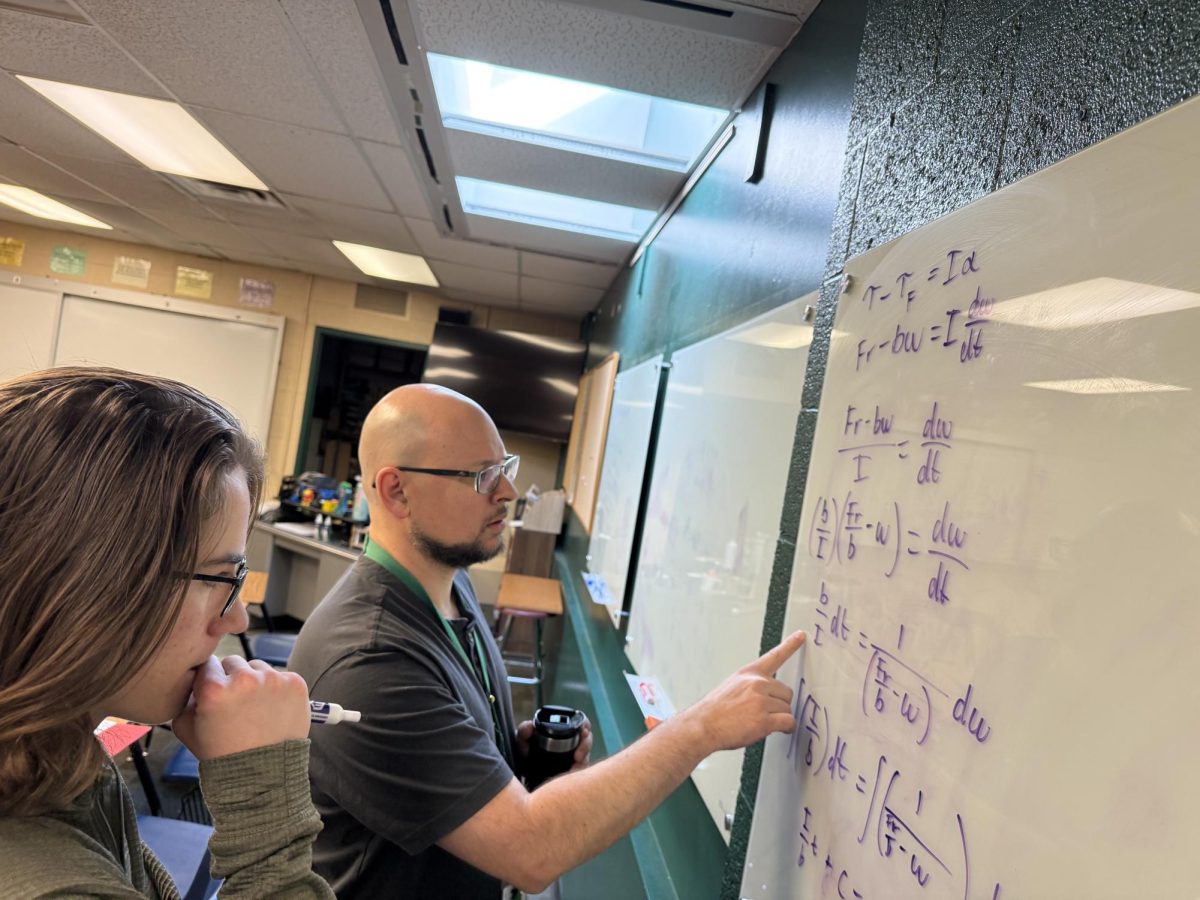




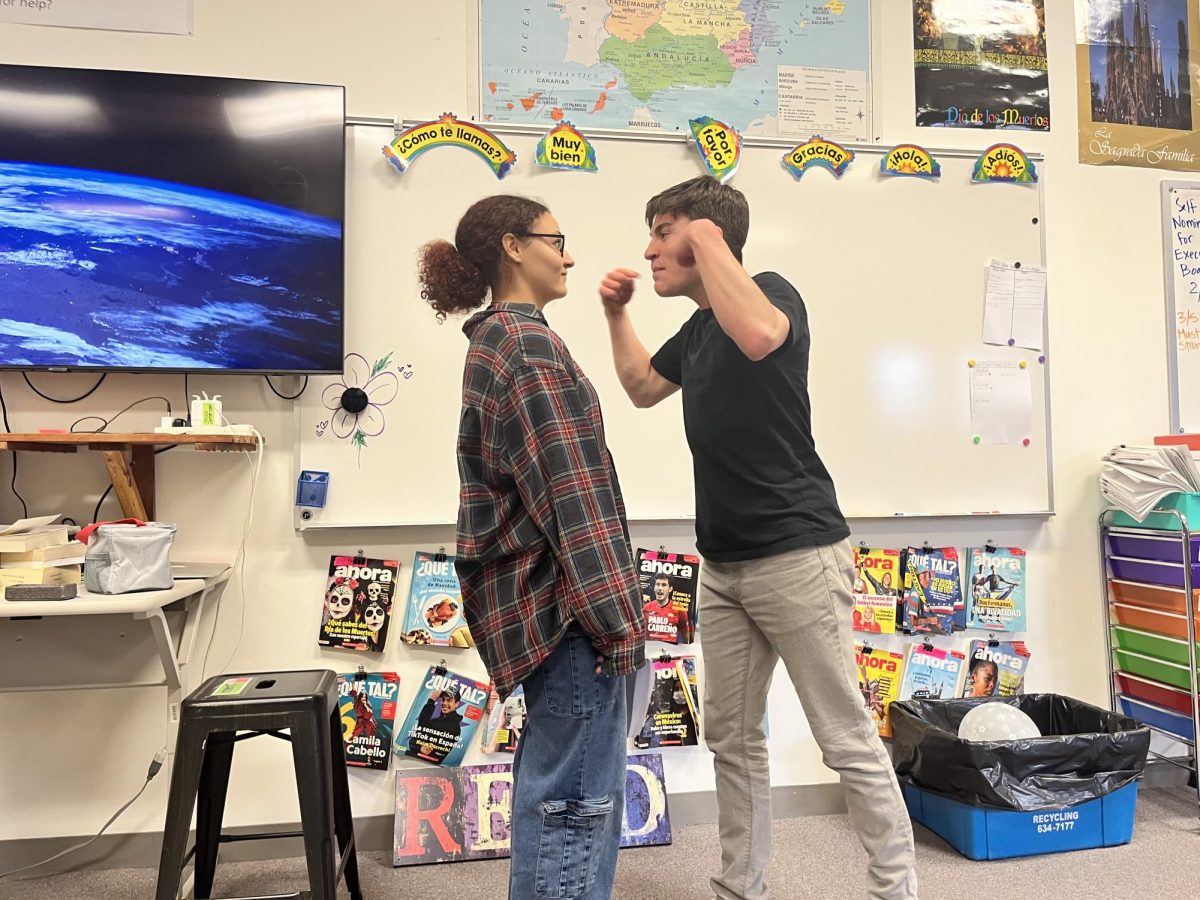







On Nov. 4, the halls of Manitou Springs High School were filled with not just students but with lawmakers, college mentors, and civic engagement. In an effort to connect teenagers with the real world process of government, nine Colorado legislators, legislator aids, and a group of students from Colorado College spent third and fourth block leading presentations about how bills become law and why it all matters.
History teacher Lawrence Housley, who helped organize the event, said the idea began when students from Colorado College reached out looking for a way to get younger audiences more involved in state politics.
“A group of CC students reached out to me. They wanted to kind of get students active in politics and understand the process of how legislation gets passed,” Housley said. “They wanted them to be able to examine some recent pieces of legislation that were passed in Colorado from the past 10 years. I figured it’s pretty relevant for students in U.S History and Government alike.”
Housley feels like it didn’t take long to see how closely the lessons tied into the courses he teaches. “History is a topic where you examine the past decisions that have been made,” Housley said. “You can look at thousands of pieces of legislation from history and see how they affected the country, and it is happening in real time.”
While the timing of the event happening on Election Day was a coincidence, Housley believes that it made the message from the event more meaningful, “It’s funny, we didn’t plan for that actually,” Housley said. “I think it’s just important to stay informed. We have a big election for Manitou Springs School District and for Manitou Springs city in general today. The bills that are proposed, these tax reforms, are pretty impactful on us personally and on our town.”
The program was led by Leah Samules and Kaviya Chidambaram, members of the Colorado College organization Sunrise, an environmental club that advocates for civic engagement. Samules said that the group created the project to bridge the gap between high schoolers and the people writing the laws that affect them. “We noticed there was a real lack of communication between high schoolers and legislators,” Samules said. “A lot of legislative decisions, right now especially, are being put on schools and education and students. We wanted to shorten the gap between students and legislators, so that students can actually get an opportunity to speak directly to the legislators making laws on their behalf.”
The event allowed students to talk to state representatives about bills that have been passed in Colorado in the last 10 years, allowing students to learn how to have their voice heard. Samules believes the goal of the event was to make government more approachable and give teenagers the confidence to speak up. “We want them to learn how to talk to legislators, but more specifically, we want them to learn how to have constituent conversations and how to lobby,” Samules said. “Learning how to talk to legislators in a more comfortable environment, like your high school classroom, will help set you up for those future conversations that might be in a more important and bigger setting.”
The event took months to plan. “We started right when we got back to campus after summer break in mid August,” Samules said. “We started reaching out to teachers all over the Colorado Springs area to find schools that were willing to work with us. We reached out to every single El Paso County legislator. We sent dozens and dozens of emails and had lots of phone calls. We eventually got nine people to agree to come, which was super, super awesome.”
For Chidambaram, the project was more than just civics; it was about empowerment. “I get really anxious when I read the news every day and see that a lot of the laws that are going into effect don’t reflect the interests of a lot of my peers,” Chidambaram said. “We’re going to have to inherit our future, and it feels like a lot of lawmakers are doing everything in their power to ruin our future.”
Chidambaram believes her goal was to show students that real change often starts locally. “I wanted to make sure that students have the tools necessary to understand how they can affect legislation,” Chindambaram said. “That’s where laws begin, in our own counties, in our own states, in our own cities.”
For Chidambaram, the most important lesson is that political participation doesn’t have to wait until adulthood. “We’re trying to fight political apathy because I think that starts young,” Chidambaram said. “When you become old enough to cast your first vote, that’s a really important moment. We’re trying to help students see that there’s more they can do in the legislative process than just voting and that their vote really does matter.”
Chidambaram also feels that events like this can make the political world feel accessible. “Your vote really, really matters, especially at the local level,” Chidambaram said. “You don’t have to wait to become a lawmaker or wait to become rich. You can do it right now, and you should have the tools to make that possible for you.”
Among the visiting speakers was State Senator Mark Baisley, who represents parts of Teller County and State Rep. Marc Snyder, who both shared different perspectives on the importance of civic involvement.
“Everything that happens in the state legislature affects the lives of all citizens,” Baisley said. “Students ought to be aware of what their government is up to and know when to step in and limit that government.”
Baisley wanted students to see the government as something that should remain balanced. “My goal is to get students to think of the government as a necessary but limited utility of our lives and not as a way to provide solutions, especially to social needs,” he said. “There’s a lot of overuse of the force of law because it trumps all. Forcing people to think the way you do through the act of law is an overreach.”
Marc Snyder, a former mayor of Manitou Springs, focused on an approach from informed electorates. “I think the best thing we can do as a country is have a very informed and involved electorate,” Snyder said. “A lot of people are just turning out. They feel both parties, all elected officials, are corrupt or out for themselves. I want to have a rebirth and I want people to realize people can criticize our form of government, but it’s the best thing going.”
Snyder feels that engaging students at an early age helps preserve democratic values. “I think if you get kids that are juniors, seniors, even sophomores early on, if you can ignite some kind of passion that can be a lifelong thing,” Snyder said. “Talking to younger kids is important because this is the time when people are really finding their way and identifying who they are and what they value.”
For students who want to get involved, Snyder believes it’s best to start off small. “Get involved in something you’re passionate about,” Snyder said. “If there’s a ballot measure or a candidate you believe in, work on their campaign. Learn how to go door-knocking, make phone calls and prepare mailers. Doing the grunt work really teaches you how the system really works.”
For social studies teacher Sam Duff, the event was an opportunity for students to see classroom lessons come to life.
“I think it’s incredibly important for students to learn our legislative process at an early age and see just how much the decisions of our legislators impact them on a daily basis,” Duff said. “Taking them through the process gives them some control and an opportunity to engage with these bills that could potentially impact them day to day.”
Duff feels that coordinating with Colorado College and the visiting legislators made the experience even stronger. “With it being Election Day and everything, we really want to improve our student involvement in politics,” Duff said. “It was a great opportunity to collaborate with our community partners and give students a chance to present their findings and go through these bills.”
Duff believes that one of the most important lessons from the event was about civic duty. “It is your civic duty as a citizen to be aware of what’s going on around you,” Duff said. “Really emphasizing the value that students have in expressing themselves and voting and sharing their voice, that’s the big takeaway.”
For Wade Maruszak, a junior at MSHS, participating in the event was both exciting and enjoyable. “It was kind of cool to be able to talk to legislators and representatives,” Maruszak said. “ It was a lot of fun. A little more time would have been nice on the presentation itself, but all around it was a good time.”
Maruszak feels that experiences like this one help prepare students for life outside of high school. “In high school, you only have, at max, four years left before you’re 18,” he said. “So you’re voting on major things that are going on in the world. I think it’s just important that funding goes to the correct thing. It just makes sense that we really touch on what needs to be learned for people to be able to go out into the world and do what they think they should do.”
Junior Braylon Green learned something new from the event. “I feel like today was a really cool idea and cool concept,” Green said. “ What I’ve learned is that the legislative process is very complex, and you have to learn to be patient in order to get what you want out of it.”
Greene feels that the experience also gave him a better sense of how his generation fits into politics. “It’s our future, and we need to know what’s happening and how our votes and our participation in politics affect what might happen in our future,” he said. “I hope to take away some political views and more understanding of how a bill becomes a law and how voter participation actually affects what happens.”
After the event finished students expressed their thoughts on the event while teachers and lawmakers hoped that it sparked civic interest in the students. “If it goes really well, we hope to bring it to some other high schools,” Samules said. “And maybe even come back here next year.”