

















High school is the last real step in a person’s life before they enter the world on their own; students are the world’s future, and part of being an educated and productive member of society is a person’s interactions with their environment. In our tech-heavy, advancement-focused world, young people have a greater impact than many of them know.
Generative artificial intelligence casts a looming shadow over the already-warming-world. Everywhere you look, an AI overview or assistant is just waiting for a click. According to a College Board study, 69% of high school students reported using ChatGPT to help with school assignments in May 2025. So, what could be the harm in getting a highly intelligent software to complete assignments for you? Not only does a single prompt to ChatGPT use anywhere from 10-25 milliliters of water—meaning 20 prompts in a day can total half a liter, but AI use also encourages lazy habits which harm your own development.
The water that AI data centers utilize for cooling is a finite resource which is wasted on maintaining super computers. “I think the big concern right now is the water usage for these data centers…and they use a tremendous amount of water,” MSHS AP Environmental Science teacher Alicia Mauer said. “And with climate change, that’s something that we have to be really, really concerned about, because some areas—like ours—are likely to experience drought, and if we don’t have that groundwater recharge, then that means that we’re going to be in a really precarious situation in terms of our fresh, clean drinking water.”
Beyond concern for the future of the planet, AI raises questions about the future of students’ learning. “It just feels like they’re shorting themselves the opportunity to grow. I think because, when you use AI, you’re taking away the opportunity to think through something,” Mauer said. “So there can be some benefits to doing things more efficiently, but I think that you will probably struggle with critical thinking the less practice you have with it.”
A big part of Mauer’s decision to teach the AP Environmental Science class was to encourage environmental stewardship. “I think that’s the best way that I can see to be a part of positive change: being really invested in your local community, and also bringing awareness to these things that really matter in terms of who we are as consumers, because we live in a capitalistic society, so every dollar we spend is like a vote towards something,” Mauer said. “If we can be smarter consumers and vote for things that are more responsible in terms of their resource use, or maybe that means pulling back from AI and rethinking that.”
One of the easiest steps students can take—beyond cutting out their use of AI—to support the struggling environment is picking up trash when interacting with nature. Whether that be picking up trash when out on the track or in students’ towns, preventing trash from entering water sources is one of the best ways to maintain a stable ecosystem. More complex steps, like packing lunches in reusable containers and participating in composting and recycling help the environment too. “Use a [reusable] water bottle, use actual cutlery instead of a plastic spoon that you’ll never use again that’s going into the landfill,” Gabrielle Waters, media center tech and Environmental Club advisor at MSHS said.
A feature of Manitou Springs that cannot go unmentioned is the Flying Pig Farm, which is run locally and supported by volunteers. They give back to the community by hosting workshops and camps focusing on natural learning. Nicholas Engracia (9), a member of Environmental Club as well as an intern at the farm, was drawn to the farm through his involvement in Environmental Club. “In the internship, we plant seeds, water them and generally help them get started,” Engracia said. “We do a lot of other things too, like feeding animals and checking for unnecessary holes on some watering tubes, as well as other side quests to help the farm.”
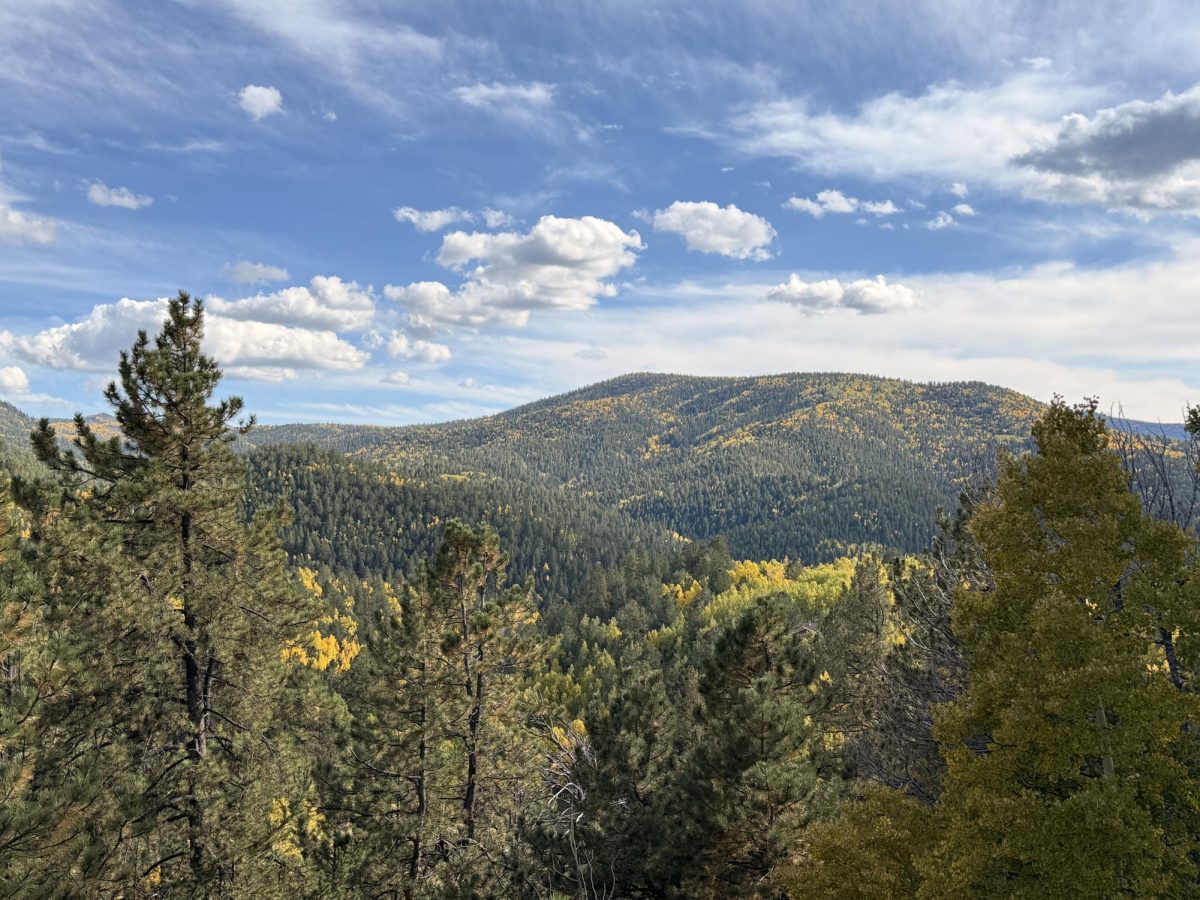
Maintaining our world is a tremendously important task. We only have one planet, despite the idea some perpetuate, and we at MSHS are lucky enough to go to school on a beautiful campus surrounded by natural life. “I know people cringe at hearing others talk about the environment like this, I used to as a kid when I moved to Colorado, but there really is just a special connection you can feel when you’re outside like that,” Engracia said. “Contribute to helping the environment, it’s never too late or cliche to do such a thing…If you think this won’t affect you, it will. Everything comes around.”
Starting small and changing your habits is the best way to go about becoming more eco-conscious. There’s no need to be perfect, as long as you’re trying; if you can’t pick up trash just for the sake of contributing positive change, do it to help yourself. The planet belongs to all of us, as well as the responsibility of taking care of it.

