

























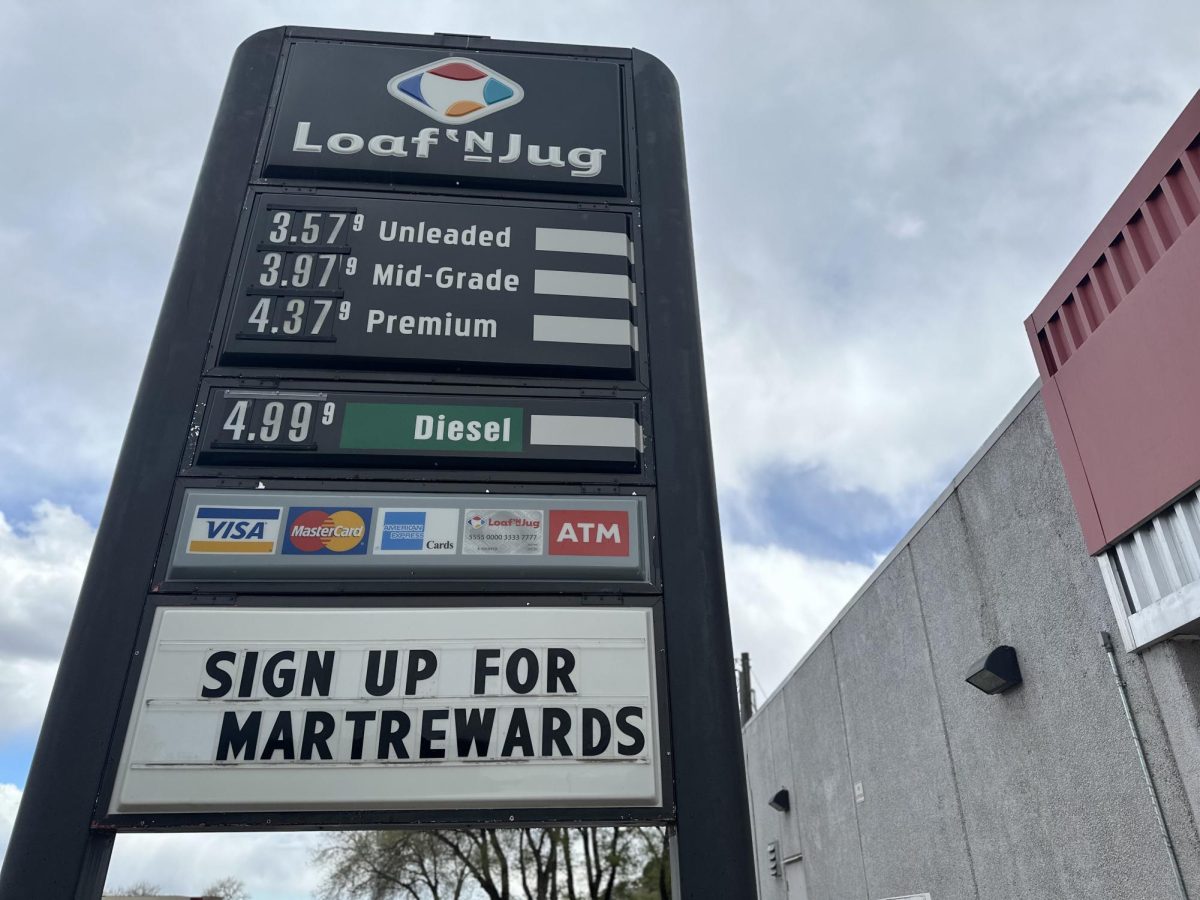
For the first time since 2022, gas prices are at a high and increasing daily because of the war with Iran. Students and staff at Manitou Springs High School are affected by this rise in the gas prices as not everyone lives here in town; some people live up the pass in Divide, Woodland Park and down in Colorado Springs.
The rise in gas price is affected because wartime disrupts global production and trade routes, limiting exports causing the cost to rise. This affects everyone; the rise in gas prices could potentially cause global inflation. According to AAA fuel prices, the average currently sits around four dollars per gallon.
Alicia Mauer, a science teacher at MSHS, hopes that we start leaning into renewable fuels because situations like this may happen continually. She believes this can potentially be good for the environment based on what they do with this situation but otherwise, this is not good for the environment. “Unfortunately, I don’t think that’s realistically what’s going to happen because our infrastructure is so set up to run off of fossil fuels,” Mauer said. “I just don’t think they’re there yet with their infrastructure to lean into renewables, as much as I would hope that they would. If they did lean into renewables, it could be better for the environment. But since, I imagine they will be trying to continue with fossil fuels. It’ll be worse for the environment, for climate change and for habitat destruction.”
The increase in fuel could affect people’s everyday spending and saving. “It makes things more expensive,” Mauer said. “So it is going to impact our budget, just like every other family.”
Rylynne Murphy Skillen, a senior at MSHS, uses her car daily. “As a student, I have to drive here, and then I drive to practice,” Murphy Skillen said. “In the morning I have to make sure I have enough gas to go to school and get to practice, or if I need to use my parents’ car or if I need to find another way down.”
Murphy Skillen sees the gas prices as conflict with what decisions should be made with money. “It makes it difficult to know where you’re gonna spend your money,” Murphy Skillen said. “If you have to go to the store, do you have enough gas to get there? And if you don’t, do you still have enough money to go to the store?”
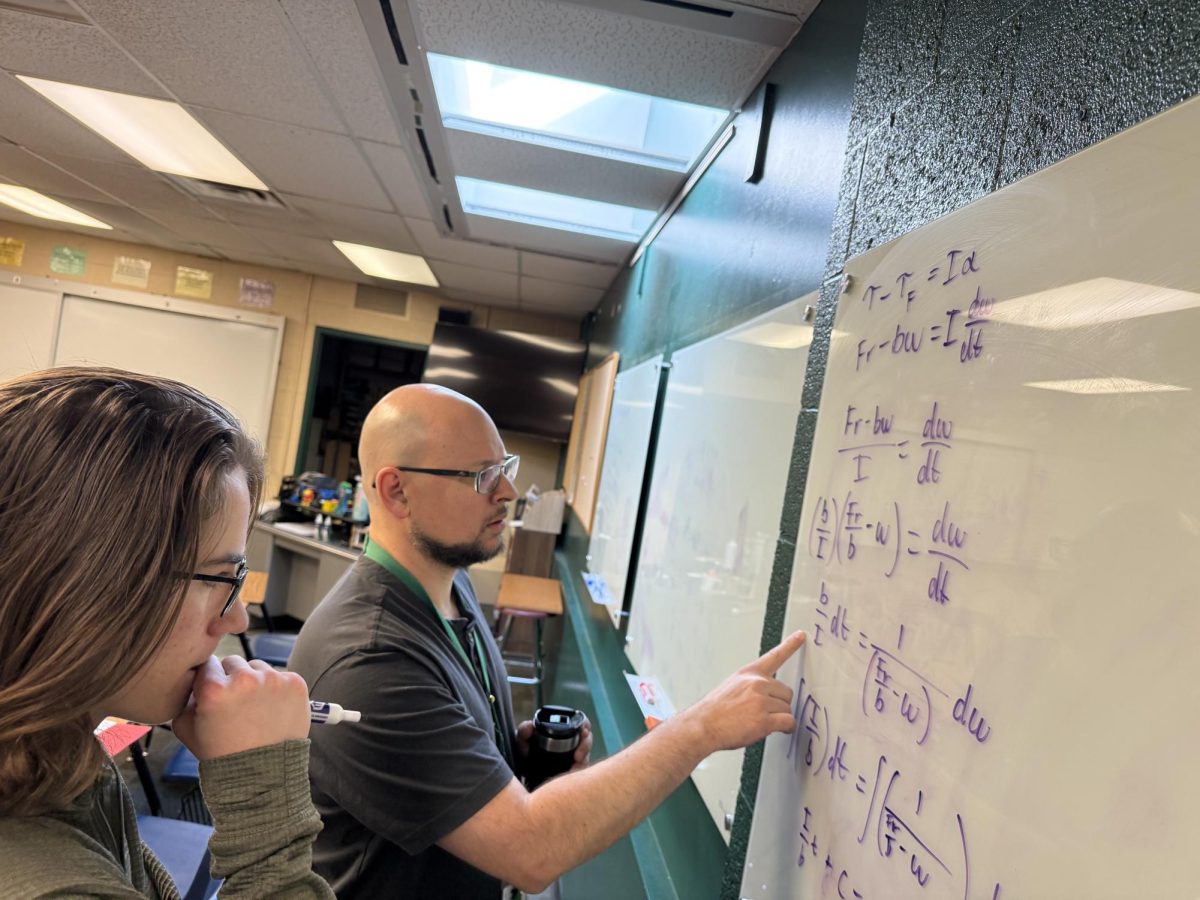
Ben Gilliam, an English teacher at MSHS, lives in Teller County; it takes him about 45 minutes to an hour to get to and from work everyday. “Well, depending on the price of gas, I am able to either put more or less in savings,” Gilliam said. “And so right now, with gas being so high, I’m just able to save less because I need to pull more out of that slice of the pie, and put it in the gas tank.”
Gilliam has noticed that the gas price increase can take away extra money that over time, turns into a lot. “A few months ago, before this huge increase, the price of gas was actually decreasing, and I was probably spending between 40 and 50 to fill up that same truck. I mean, that’s a difference of 20 bucks a week, which over the course of a month is about probably $100 give or take,” Gilliam said.
If the gas prices continue to rise, it can affect Gilliam’s future plans. “I’ve still gotta drive to work and then drive home, but I do have two really long road trips planned this summer, and another one in this upcoming winter,” Gilliam said. “If gas is up over four dollars, I might reconsider those road trips and just try to have some fun more locally.”
Gilliam wishes that this rise in gas would be better for the environment rather than damaging. “Hopefully there’s a silver lining in all of this that hopefully it will push more people to drive less because gas is so expensive right now,” Gilliam said, “or even to look at alternative fuel sources beyond petroleum, as far as the impact on the environment, hopefully it’s a good one.”